

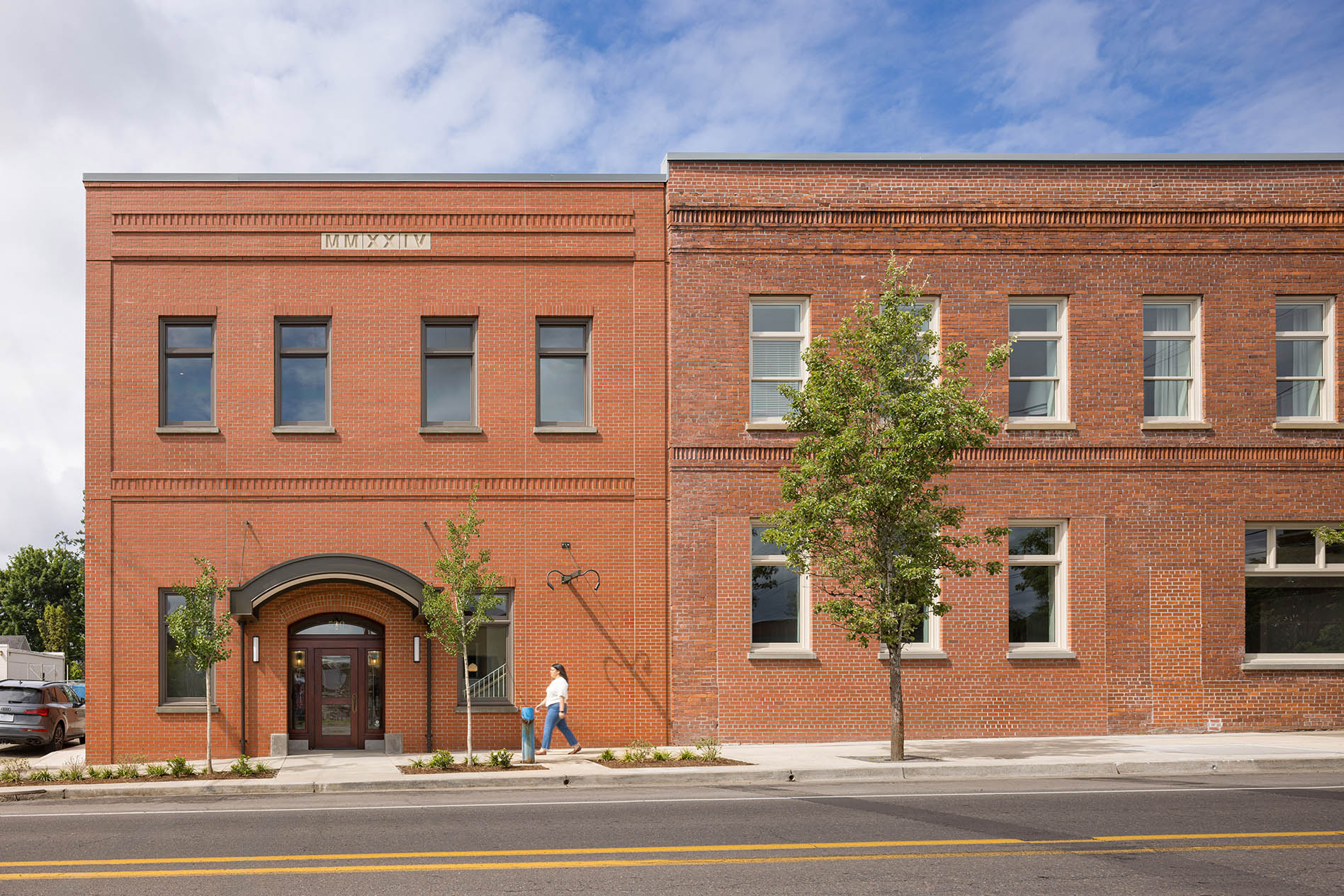
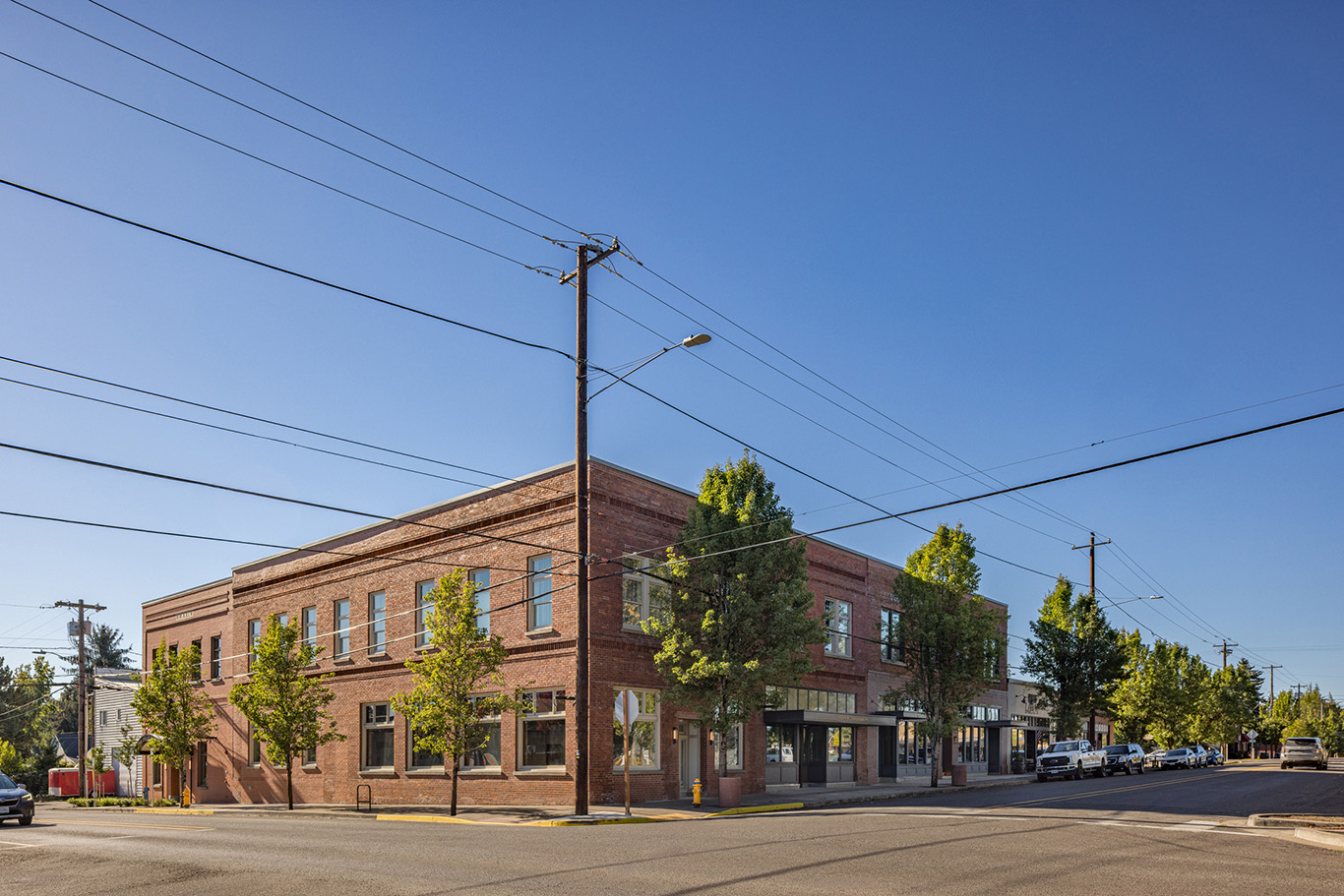
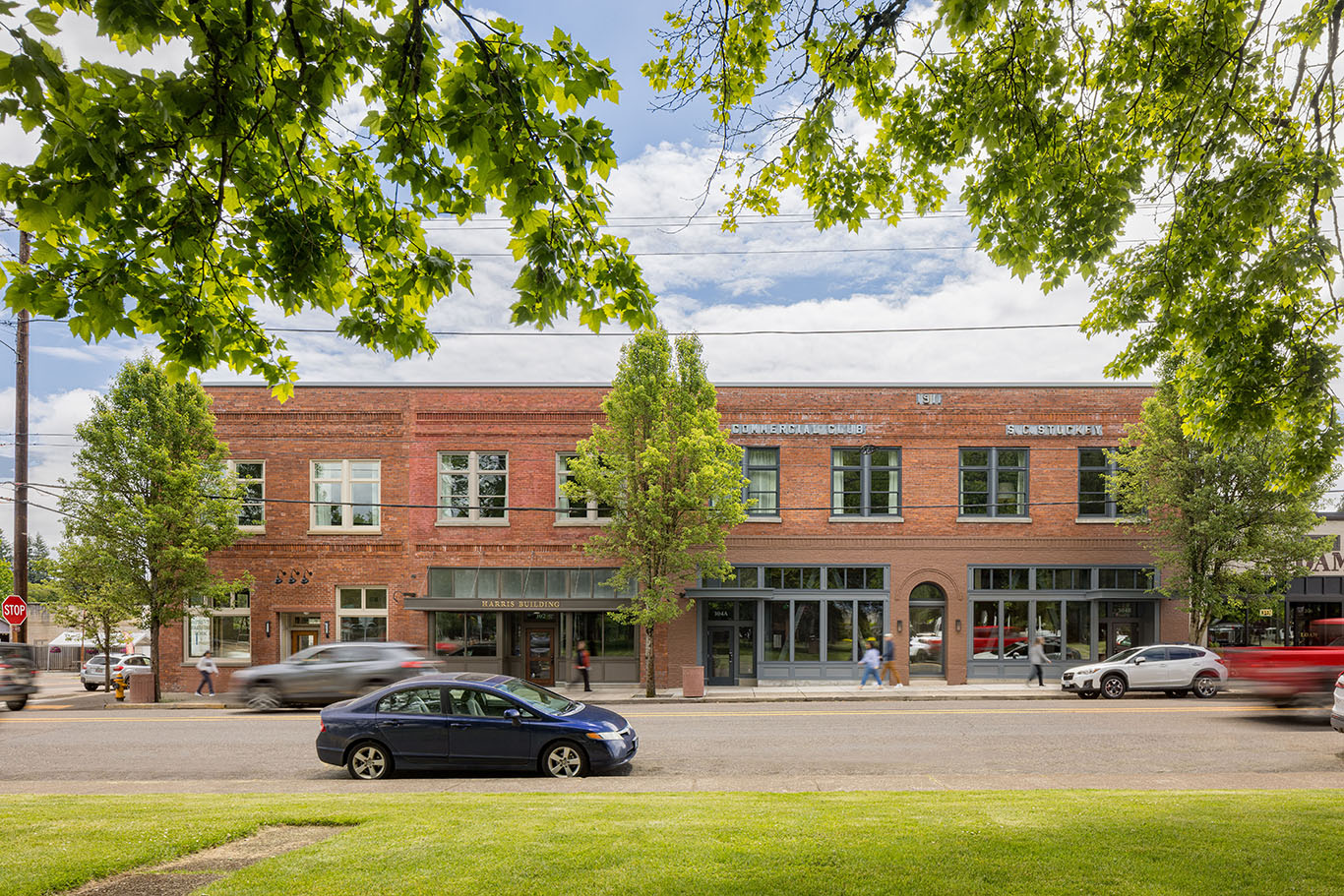
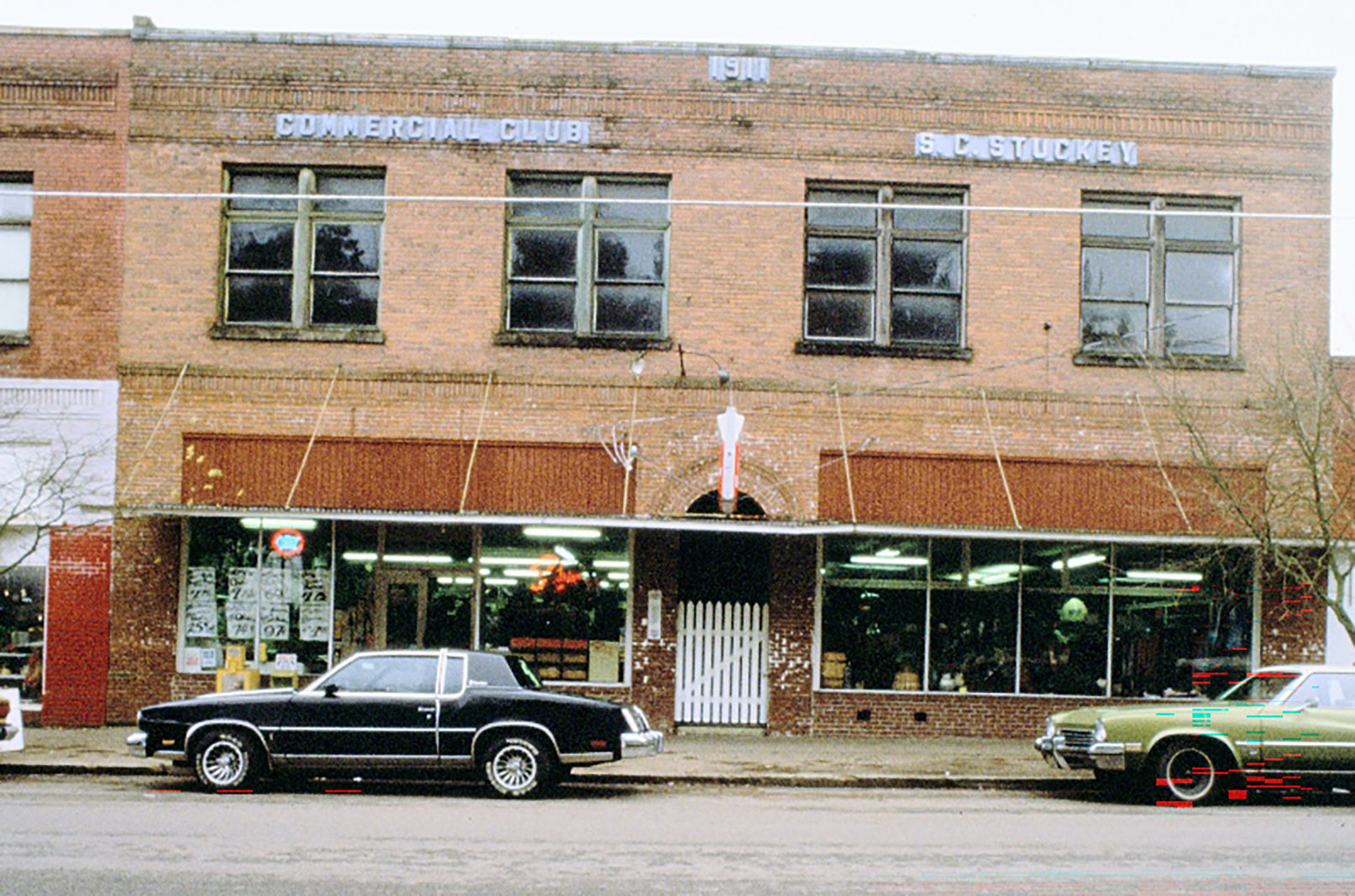
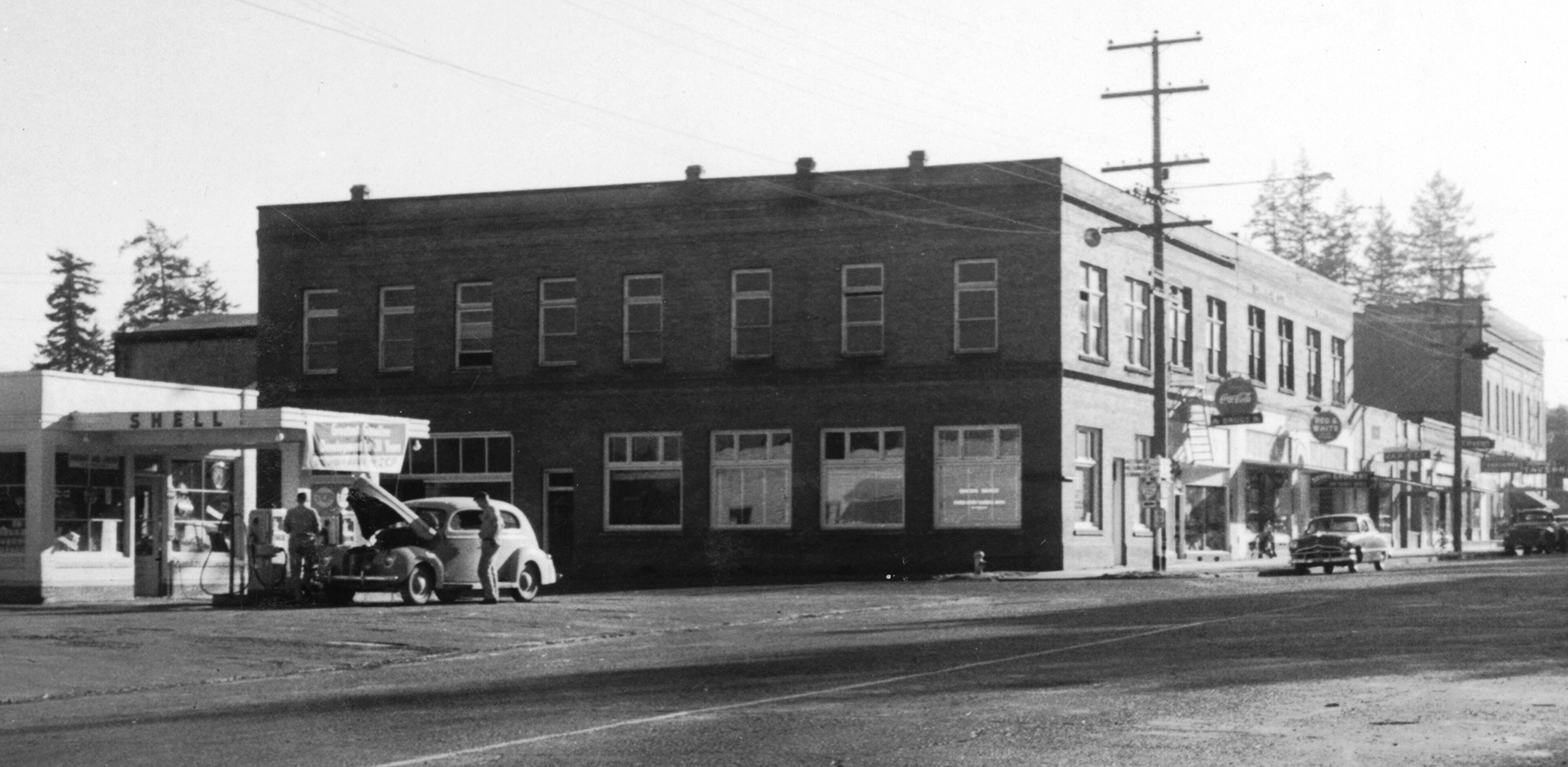
Located in the heart of Dayton, the Merchant Block represents the transformation of three early 1900s masonry buildings into a vibrant mixed-use destination. Originally constructed as independent structures, the Stuckey, Harris and Bank of Dayton buildings now function as a unified development with ground-floor retail and a 12-room boutique hotel above, known as The Inn at Dayton.
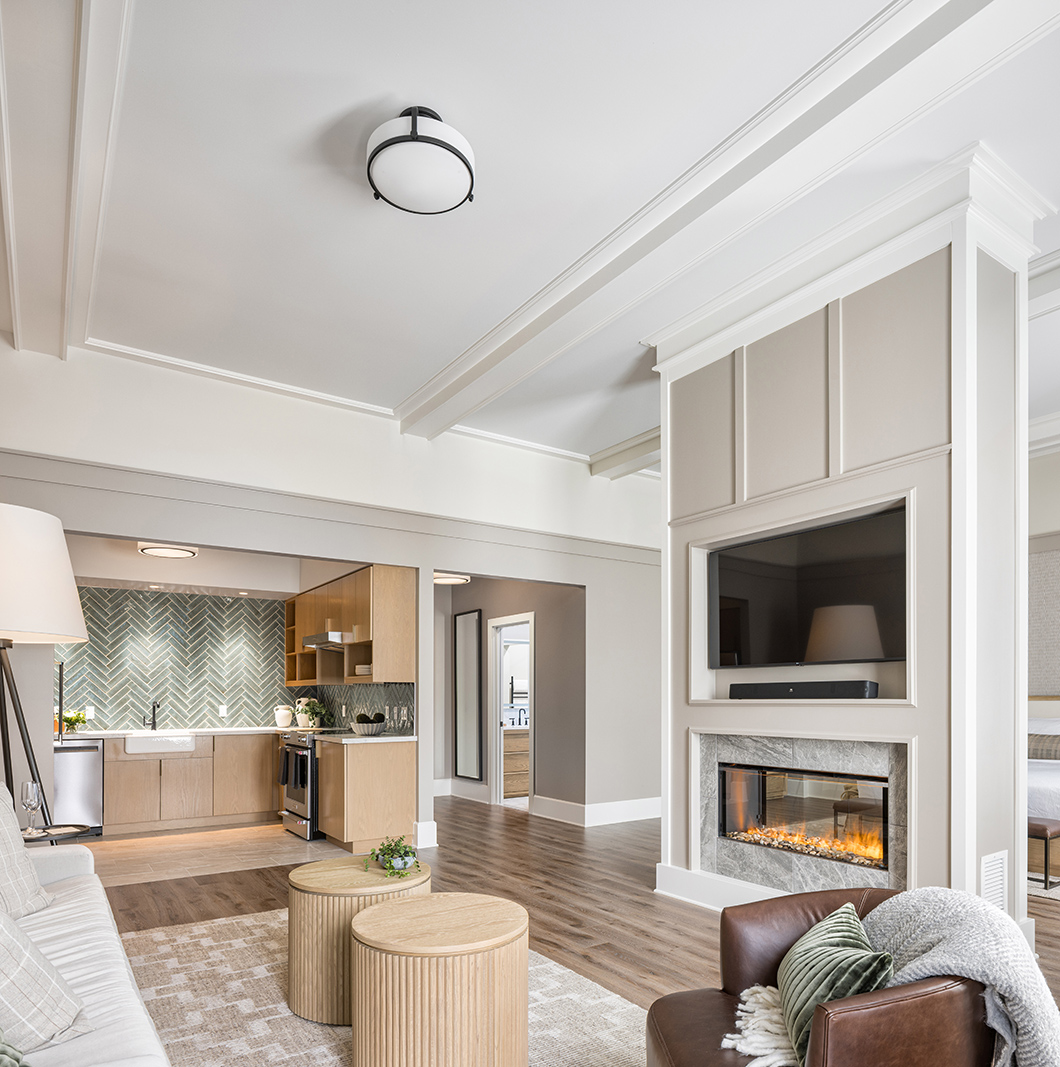
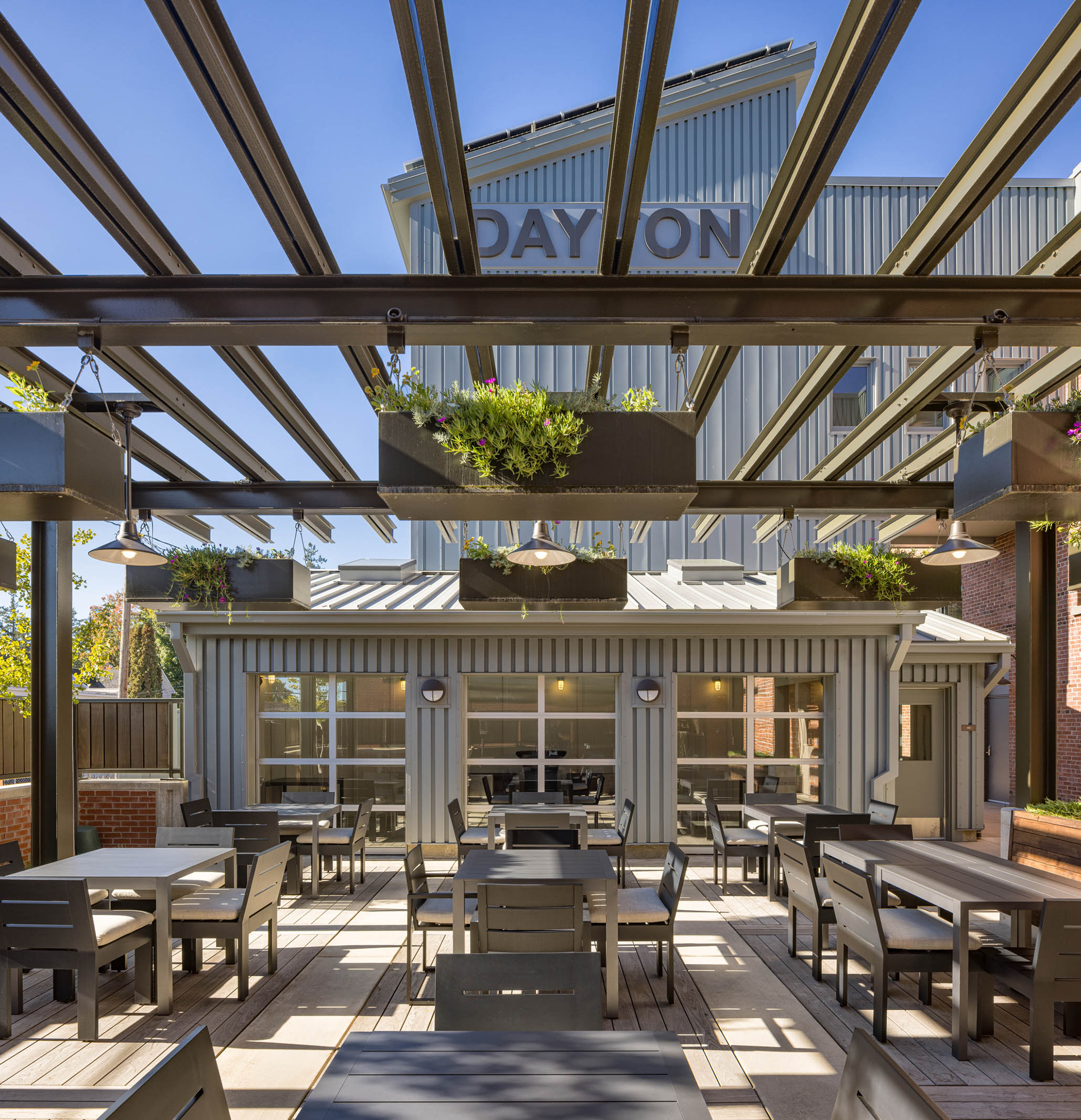
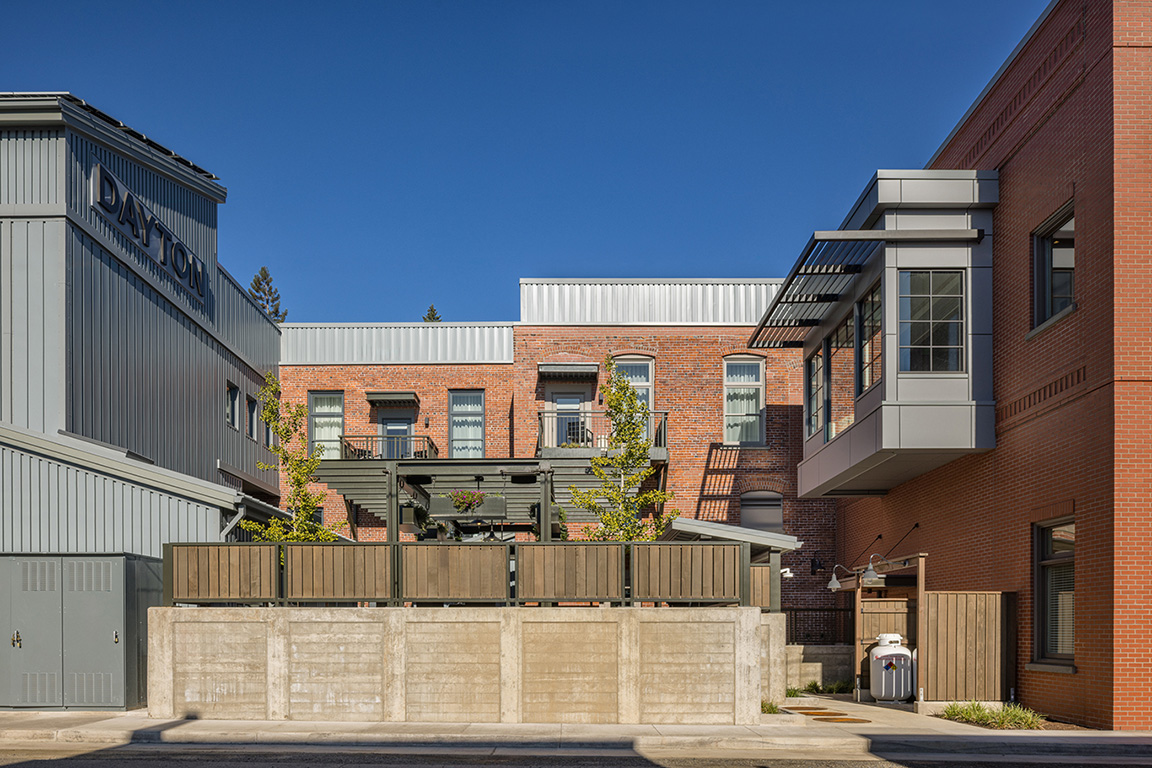
The hotel offers a range of guest accommodations with warm, refined finishes that balance historic character and contemporary comfort. Exposed brick, restored storefronts, carefully replicated windows and thoughtfully detailed millwork celebrate the buildings’ past, while modern systems and amenities deliver a hospitality experience aligned with Oregon wine country’s reputation for quality. A two-story, ground-up hotel addition connects discreetly behind the historic façades, housing the lobby and gathering spaces and opening to a central courtyard that serves as the social heart of the property. The Merchant Block is slated to achieve LEED Gold certification, reinforcing its commitment to long-term stewardship.
Collaboration at the Core of the Merchant Block
From the beginning, R&H and ownership shared a clear commitment to the project vision and Dayton community. During preconstruction, R&H partnered with the owner and design team to establish a realistic Target Value and deliver an on target GMP. Phased contracting allowed for early hazardous materials abatement and selective demolition, reducing risk and clarifying existing conditions.
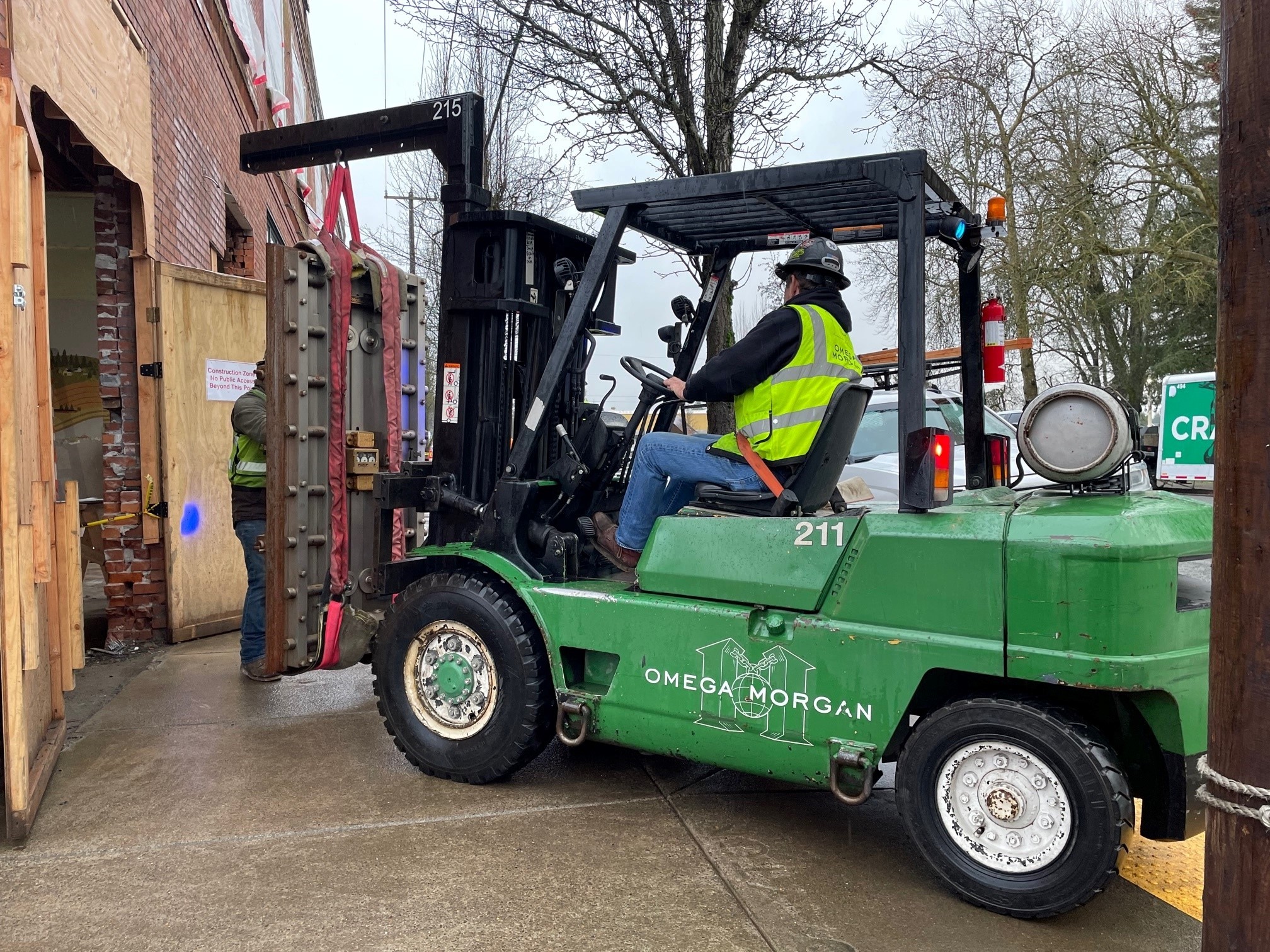
The team evaluated multiple envelope and sound mitigation strategies to balance performance and budget. They also conducted extensive outreach to local subcontractors to keep development dollars in the community and procured long lead items early – including switchgear, moment frames and RTUs – to mitigate schedule impacts.
R&H supported FF&E procurement and installation including furniture, minibars, appliances, draperies, signage and guest room hardware to meet the owner’s Memorial Day opening goal. Beyond construction, R&H maintained weekly communication with City officials and community members, as well as offering hardhat tours to key stakeholders and participating in the Dayton Friday Nights community gatherings, reinforcing the development team’s strong relationship with the community.
The Inn at Dayton welcomed its first guests over Memorial Day weekend 2025, just weeks after the loss of visionary Bill Stoller. Today, the Merchant Block stands as a lasting reflection of his long-term commitment to stewardship, hospitality and community that will shape Dayton for generations.
A Historic Landmark with a Renewed Purpose
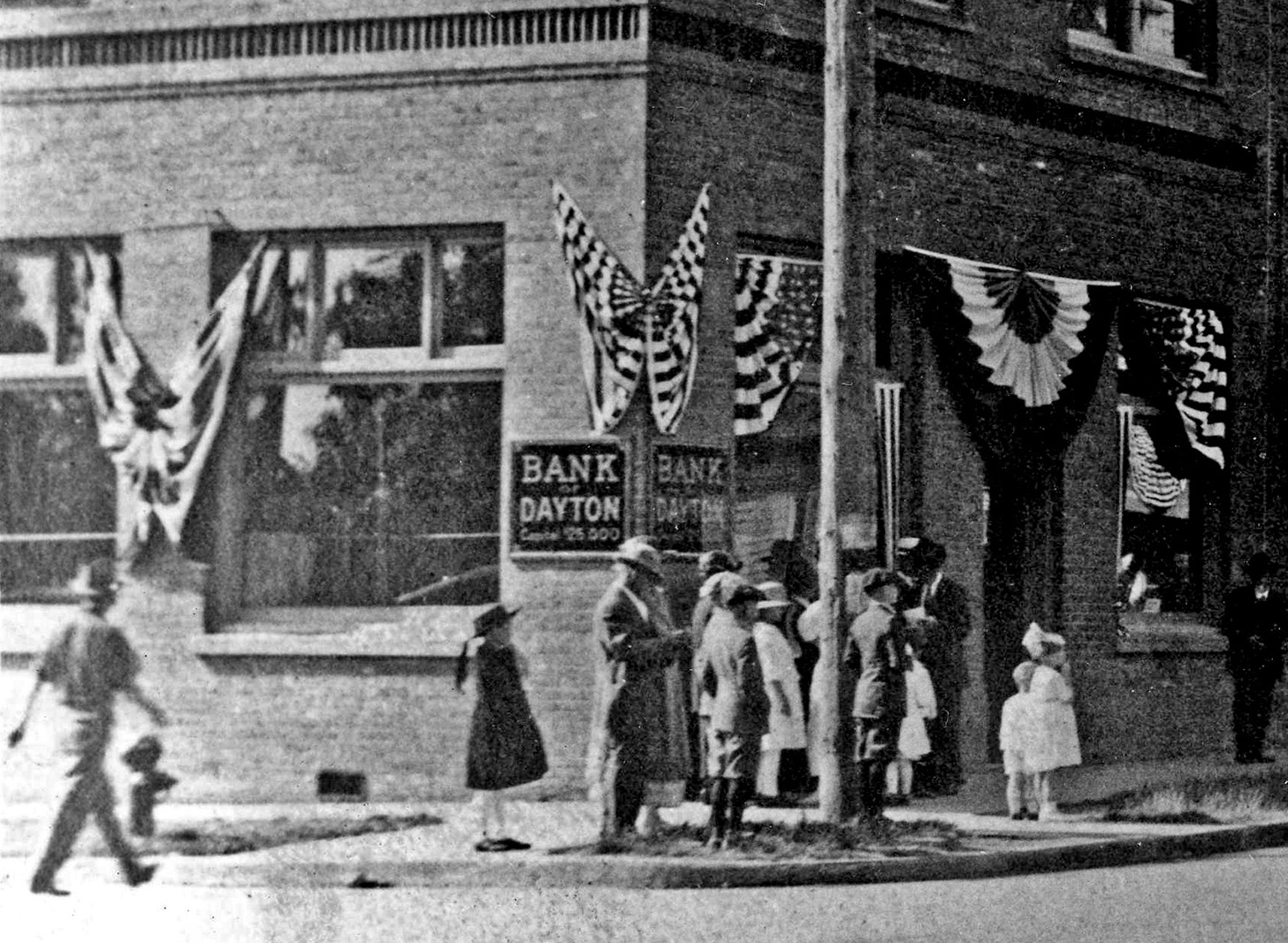
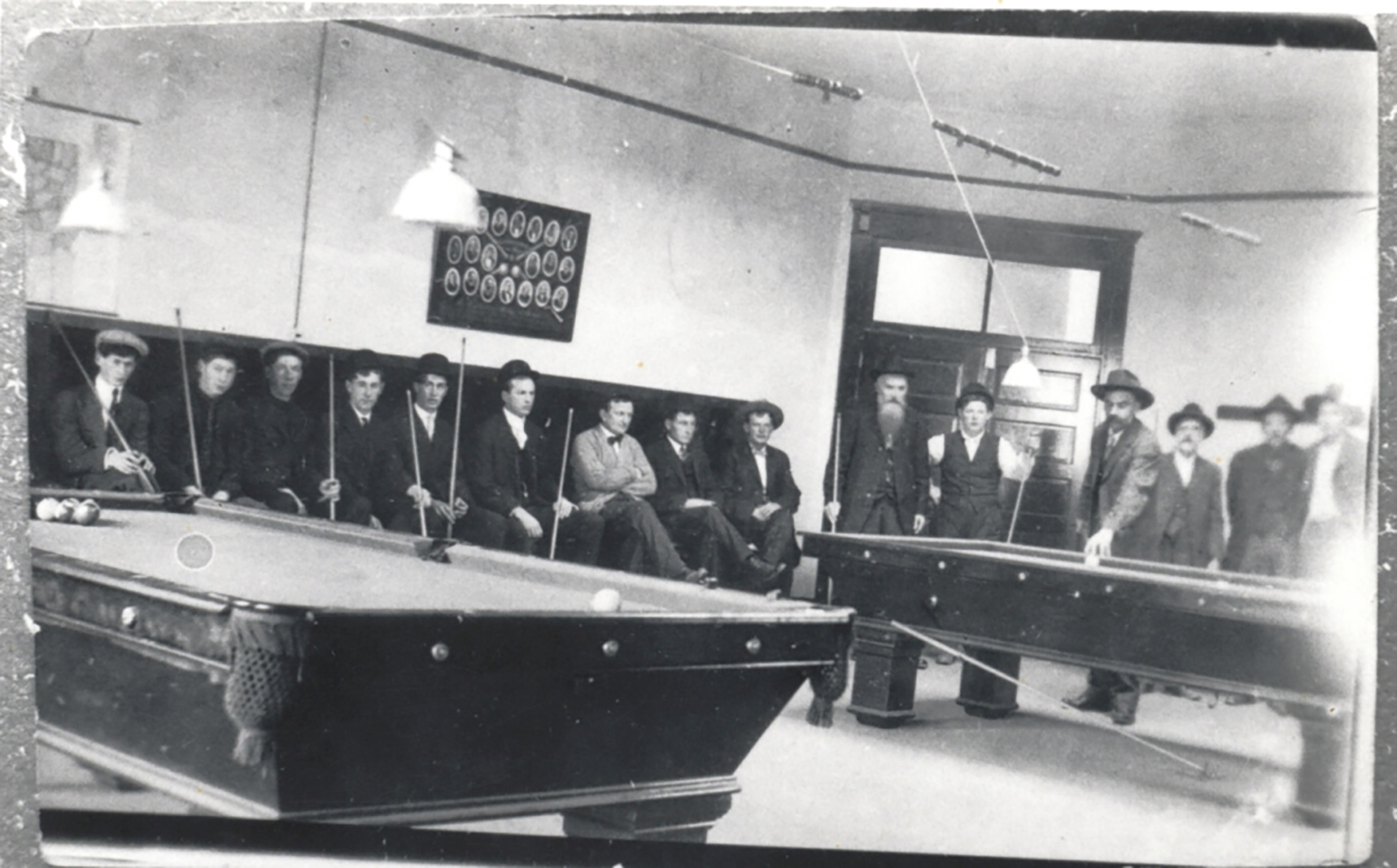
The three buildings were constructed between 1911 and 1913 and served as Dayton’s commercial backbone. The Stuckey Building housed a grocery store, post office and professional offices. The Harris Building was home to a drug store and an assembly hall. The Bank of Dayton Building contained the bank and town newspaper, the Dayton Tribune, with an assembly hall above. Over time, second floors were vacated, façades were altered and portions of the buildings sat empty for decades.
Entrepreneur and philanthropist Bill Stoller, founder of Stoller Group and Stoller Family Estate winery, began acquiring the properties more than a decade ago with a long-term vision for revitalizing downtown. Raised just outside of Dayton, Bill built a global staffing company before returning to Oregon wine country and investing in the community. His work centered on a “200 year vision” focused on hospitality and economic vitality for the region. Twin Towers LLC, the development arm of Stoller Group, leads that effort.
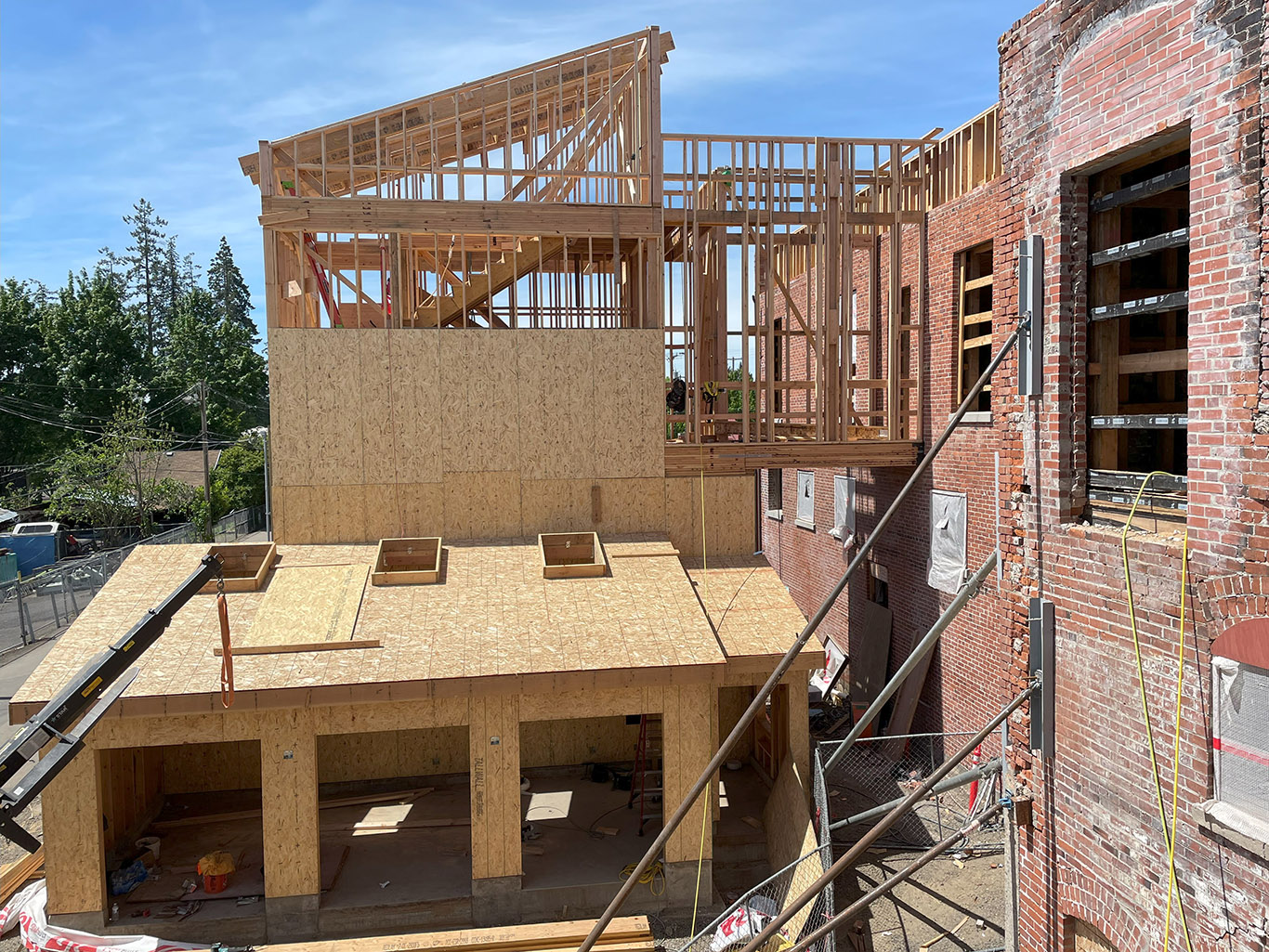
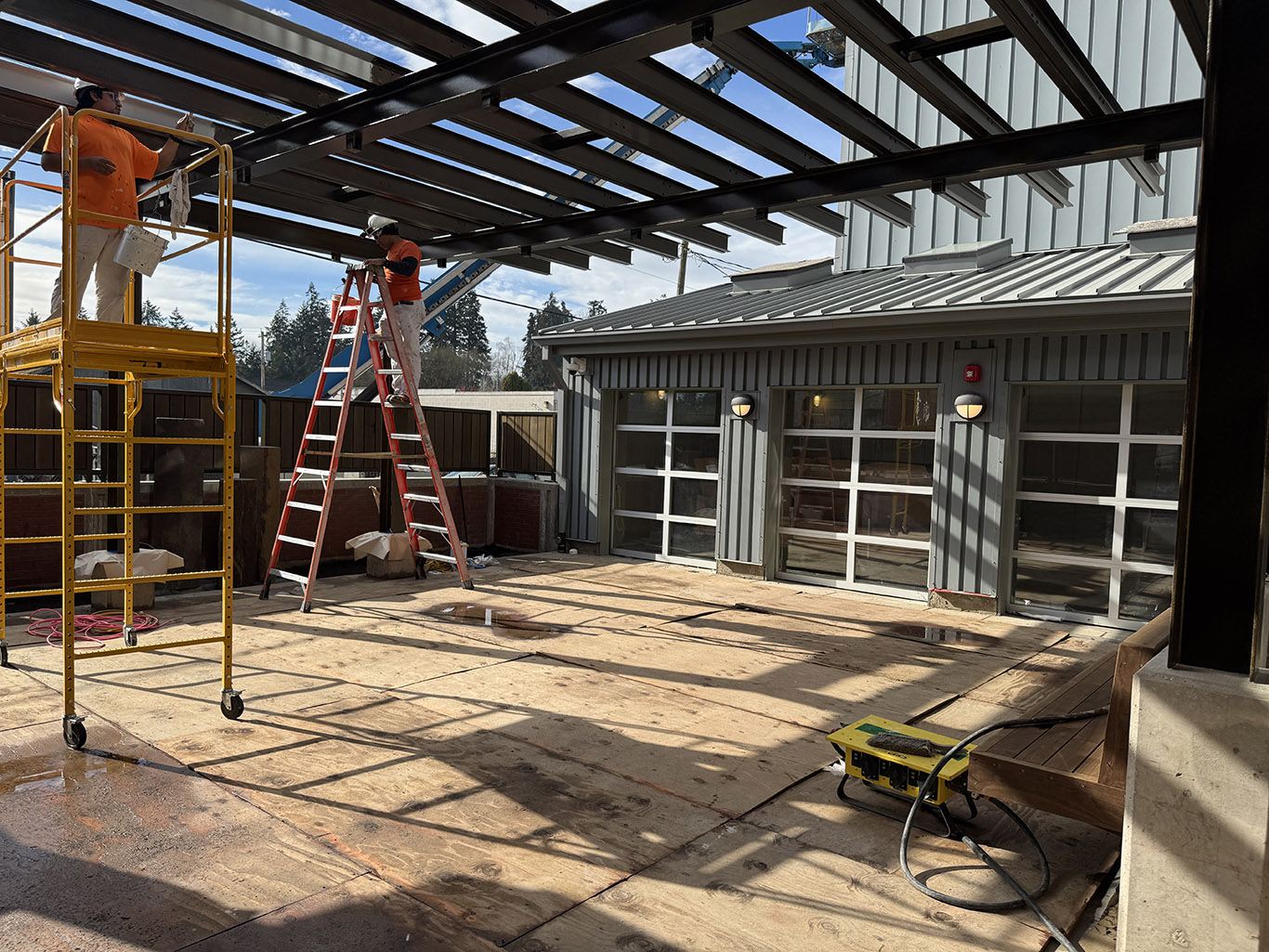
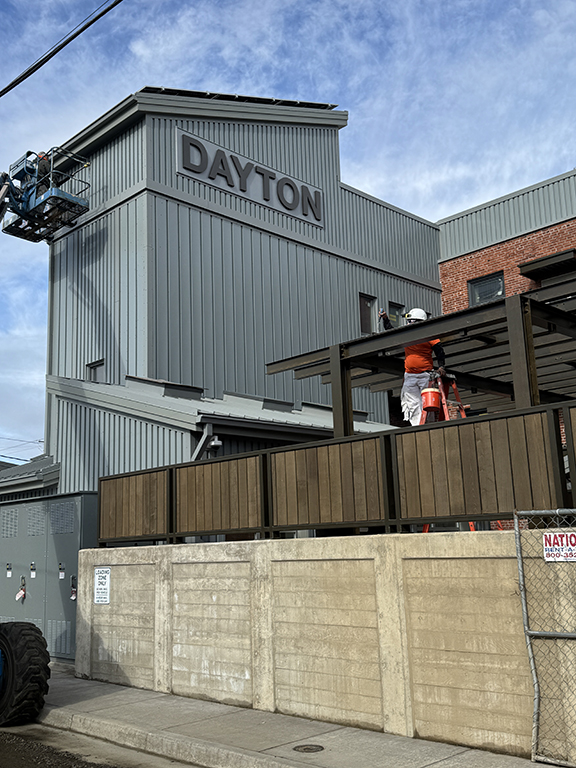
The Merchant Block is central to this broader plan. By introducing a boutique hotel downtown, the project supports local retailers, tasting rooms and restaurants while positioning Dayton to become a destination reminiscent of Sonoma’s town square. A new stair tower, now the tallest structure in Dayton, references local grain elevators and displays the town’s name, reinforcing identity and pride.
The Complexity of Building Within History
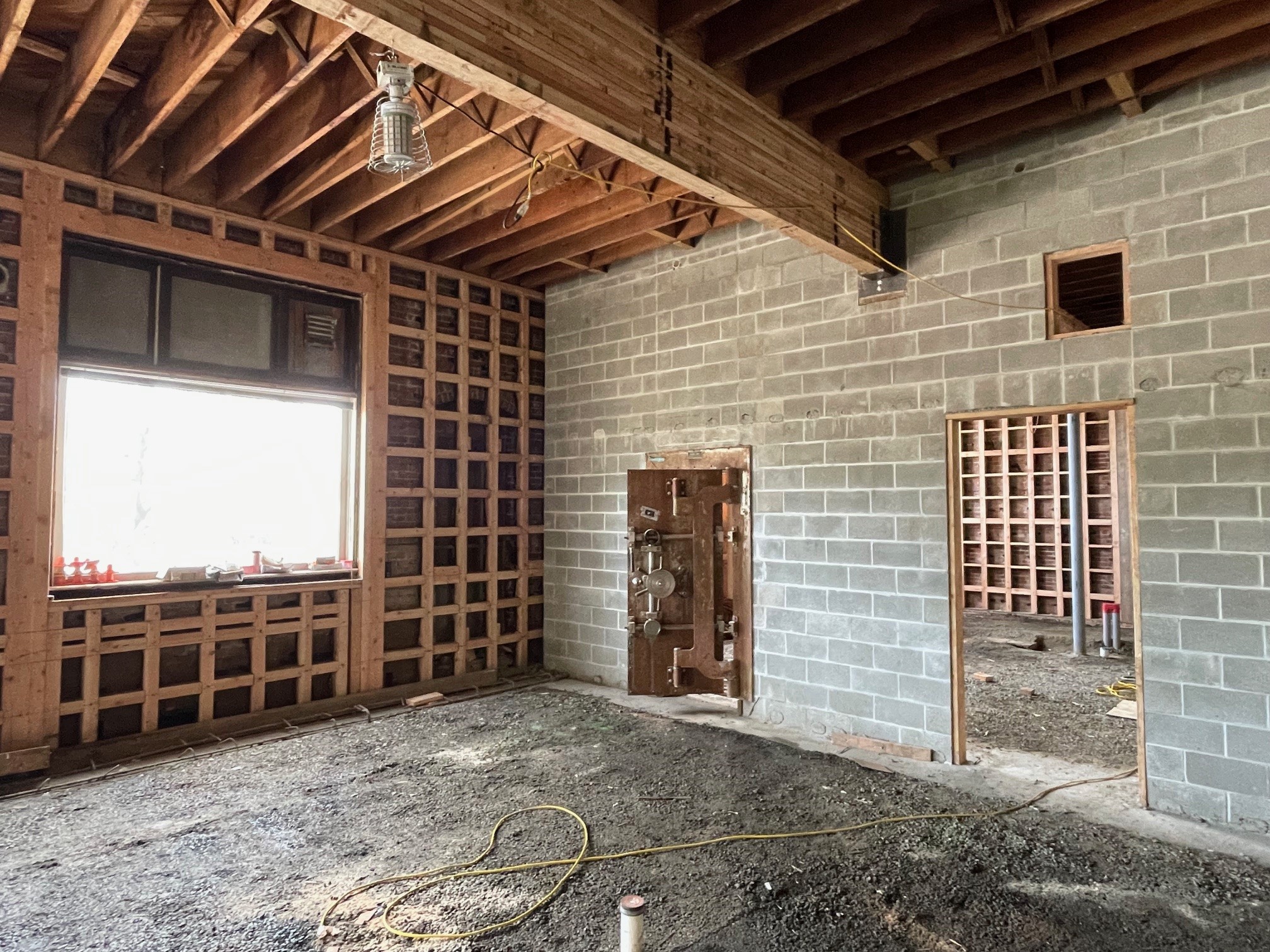
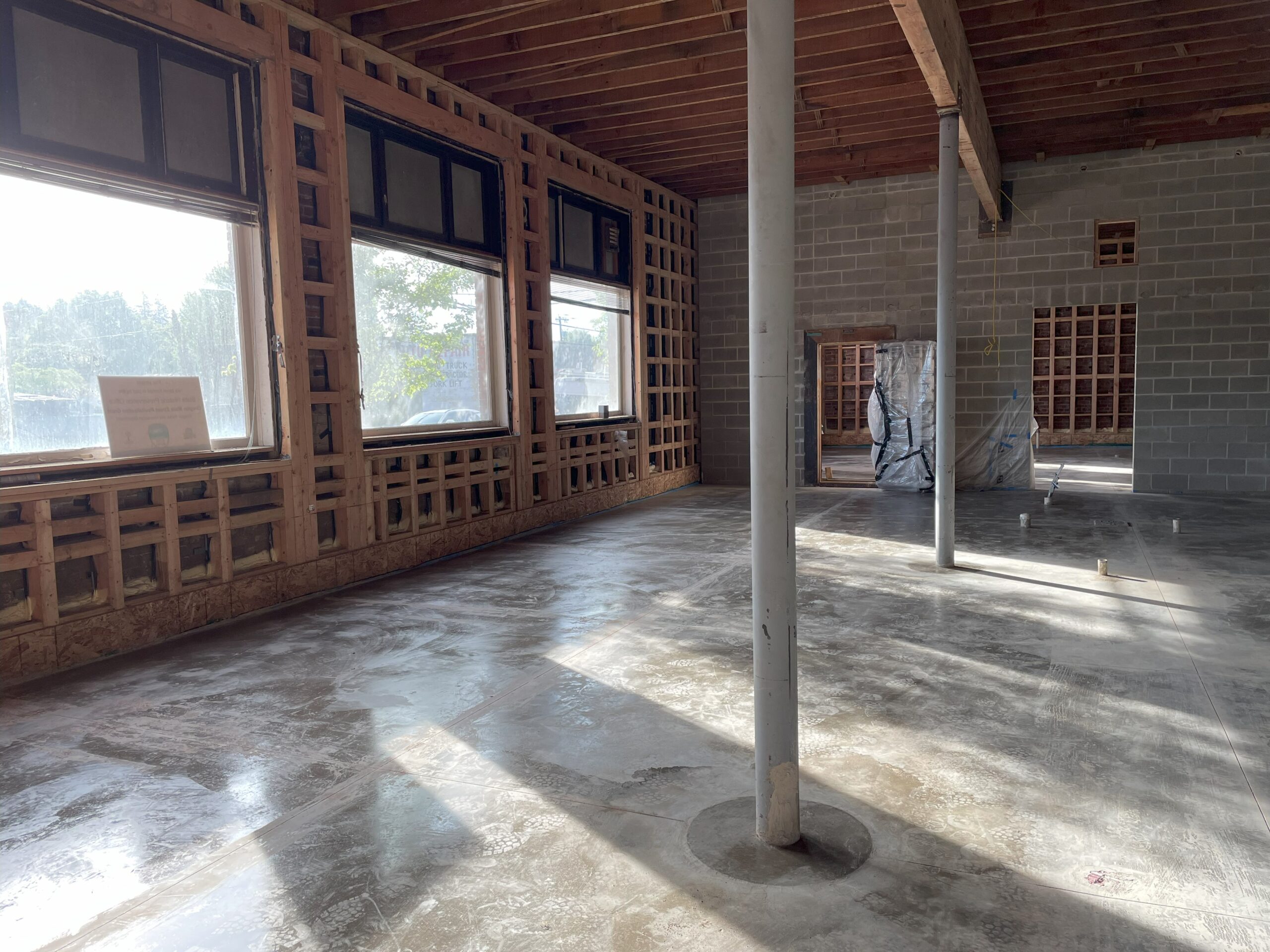
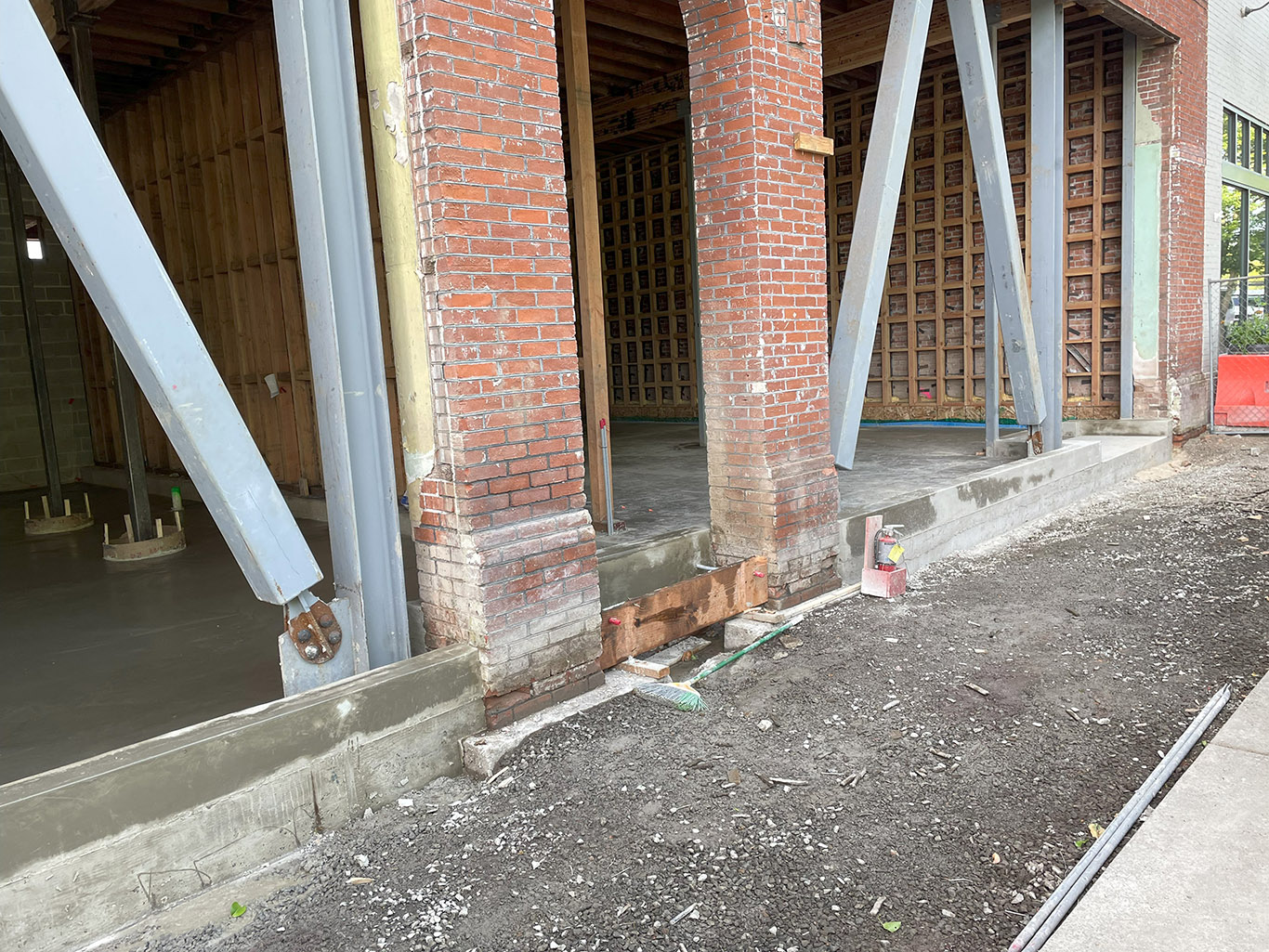
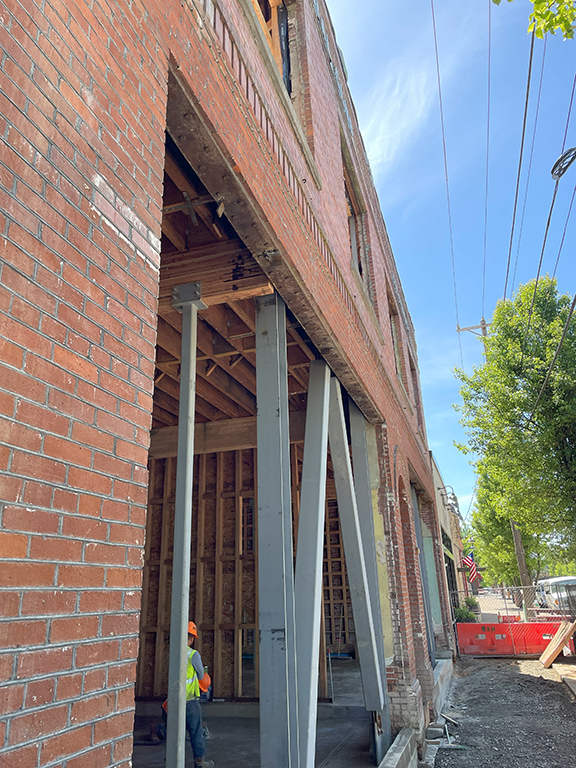
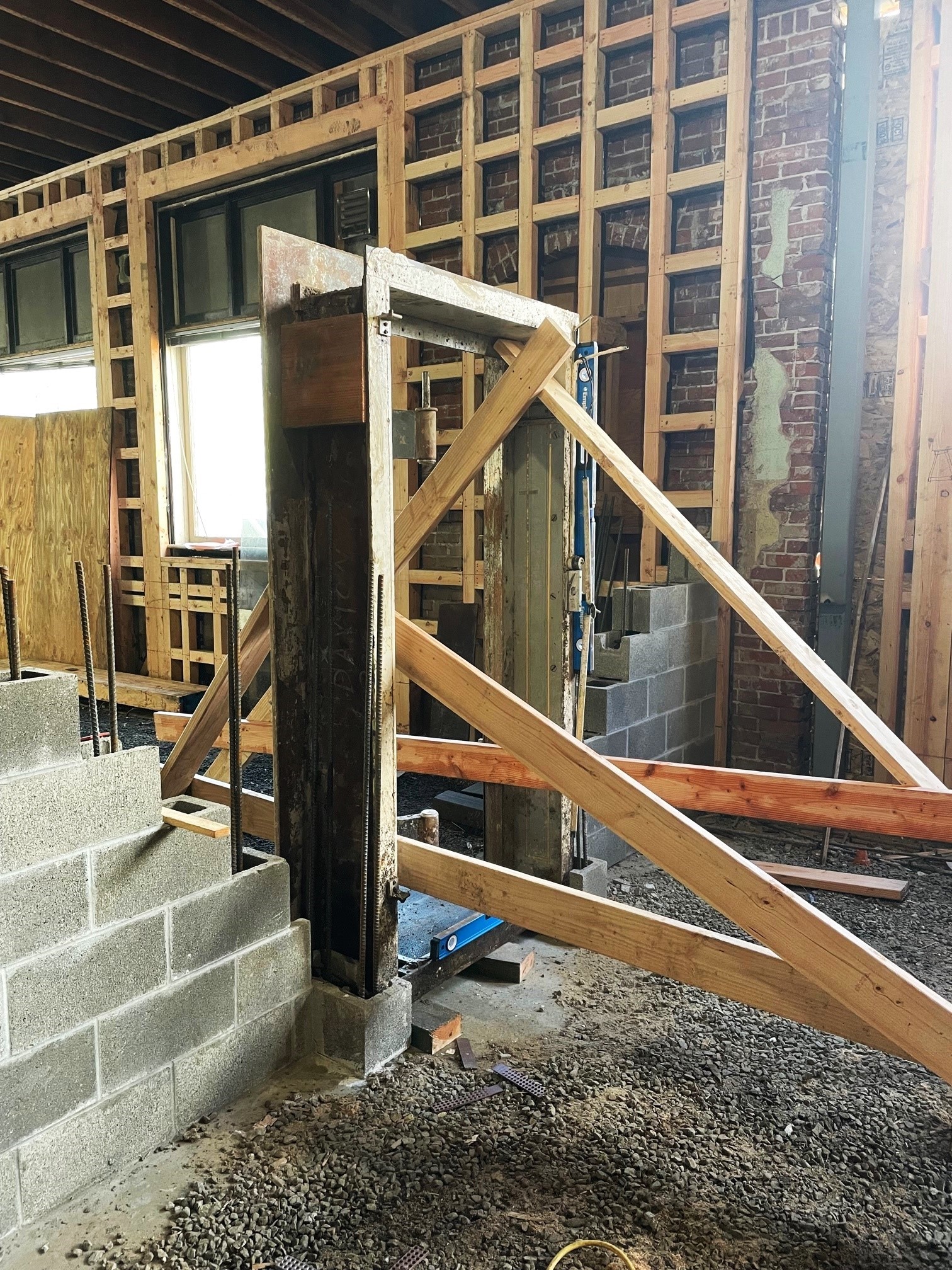
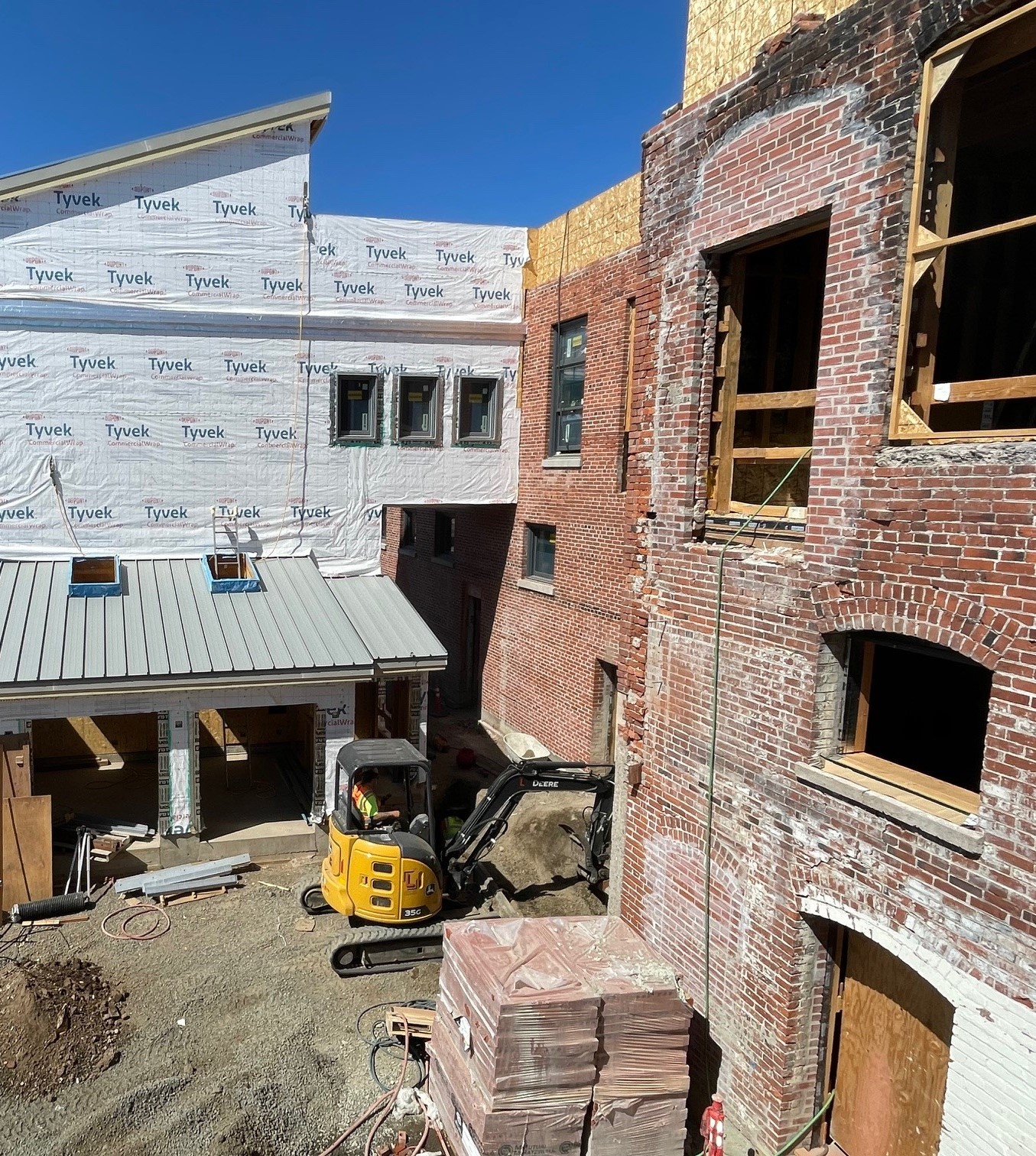
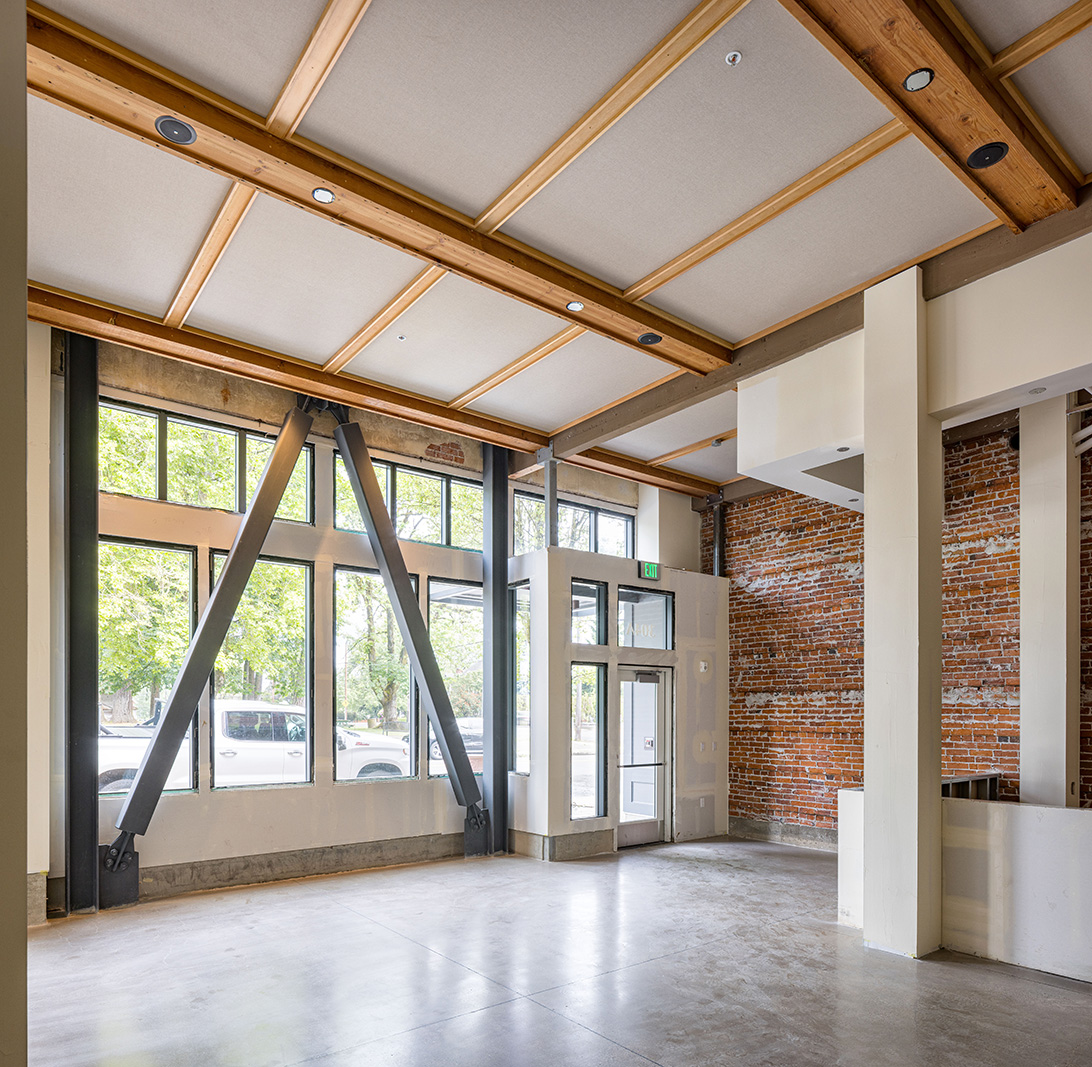
All three unreinforced masonry buildings underwent full seismic upgrades. Rather than inserting braced frames throughout, the team developed an inventive inside-out approach. A new internal wood frame system was tied to existing brick with helical ties, new shear wall diaphragms were created and gravity support was reinforced. Hidden connections transferred lateral forces from the Harris and Bank buildings to strategically placed brace frames within the Stuckey storefront, minimizing visual impact.
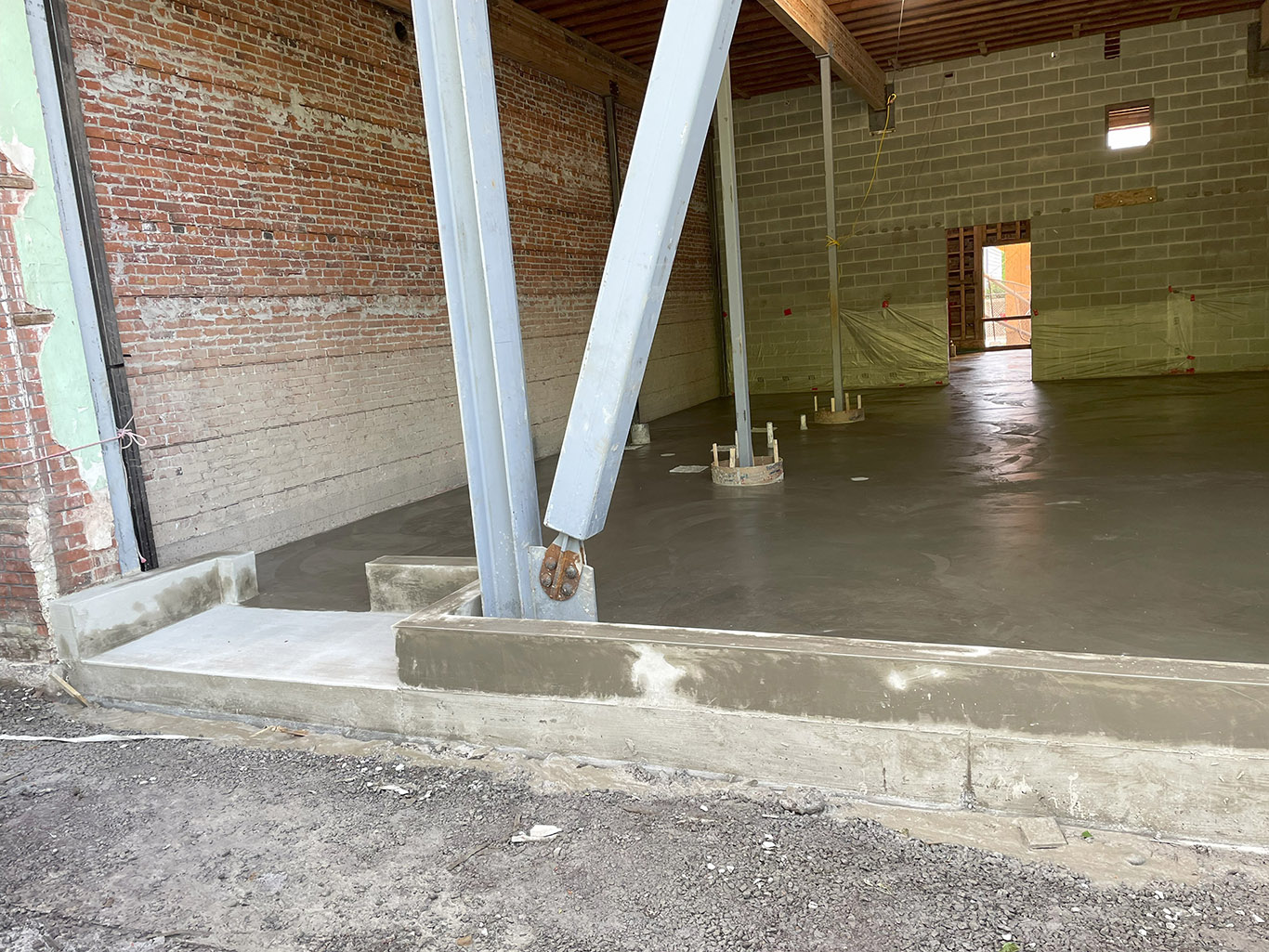
New footings and slab on grade were installed across the buildings. Varying floor elevations, historic irregularities and deteriorated mortar required custom detailing and constant field verification. Phased demolition revealed unexpected wall movement and loose masonry, while roof removal near active PGE lines demanded careful coordination.
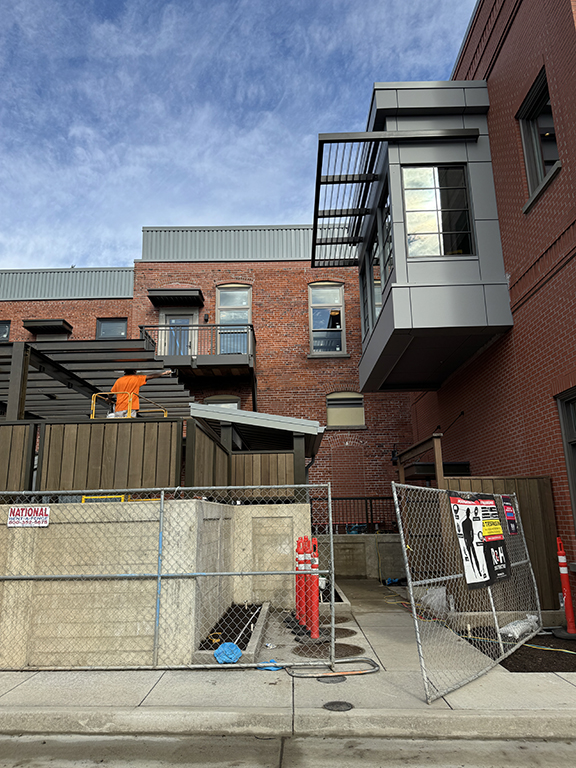
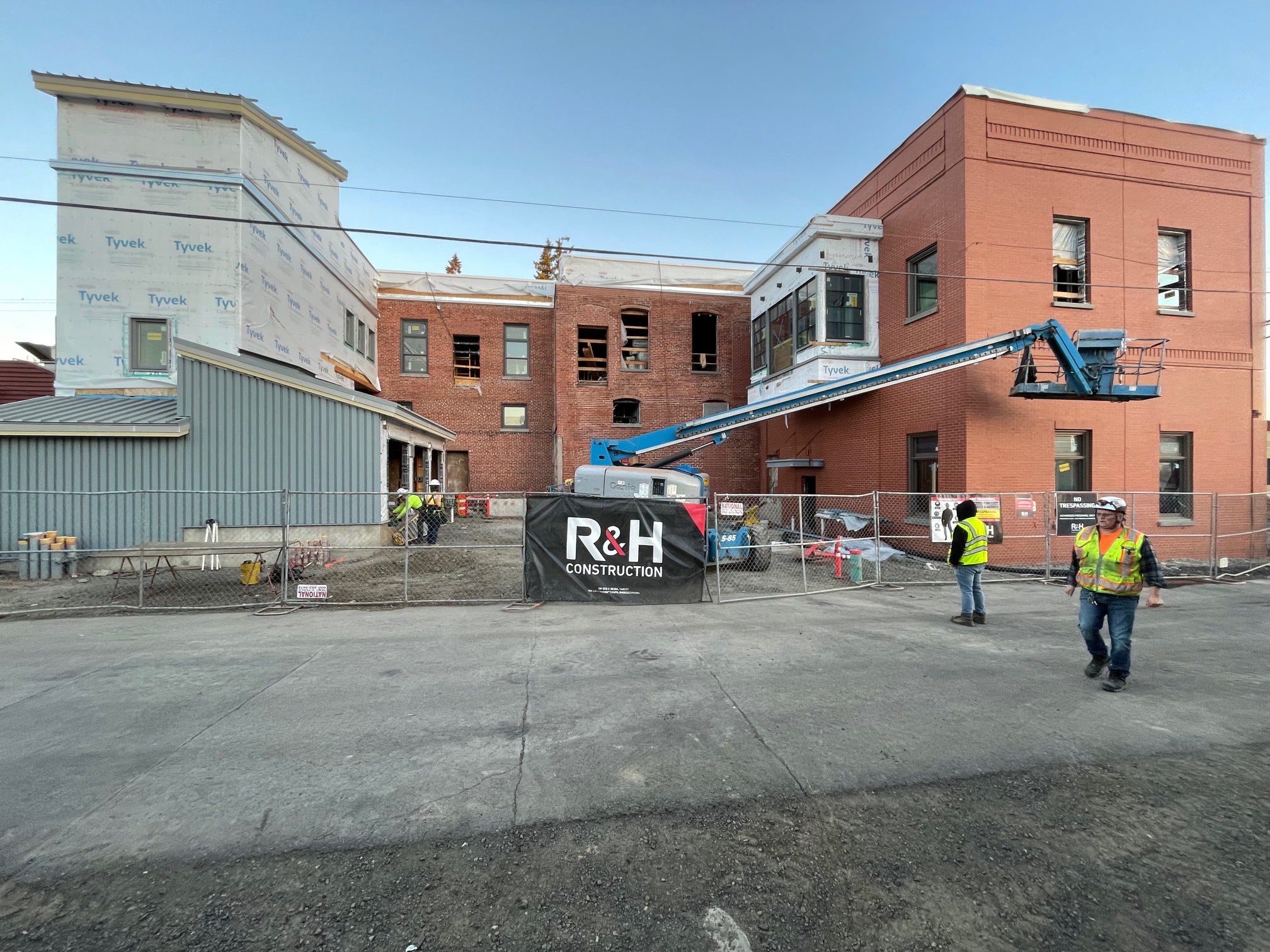
The 2021 acquisition of the Bank property and adjacent lot enabled a compatible yet contemporary addition that relocated the stairs, elevator and major mechanical systems outside the historic envelopes. This preserved interior volume and reactivated long vacant second floors. A metal-clad stair tower connects to the Stuckey Building via an elevated bridge, physically and programmatically uniting all three structures.
Innovative Technology Behind the Merchant Block
Acoustics played a critical role in the design of the spaces. The project is located along a trucking route, which presented the need for high-level sound control at the exterior walls. Since hotel rooms would be located above lively restaurant and tap house spaces, a 3-inch thick concrete topping slab was poured at the second floor to minimize sound transfer upstairs. To minimize noise pollution into the guestrooms, the bottom of the entry door received an acoustic seal that drops down onto a solid surface threshold when the door lock is engaged.
Uniting three existing buildings presented a unique challenge as each had their own floor and roof elevations and shear planes were located at different levels. During construction, R&H discovered that the second level floors were significantly slanted. The engineer noted that the acoustic concrete slab could not increase in thickness due to structural constraints. To address this, R&H mapped elevations using a laser and hand-cut structural foam at the required angles to provide a level surface prior to pouring the slab.
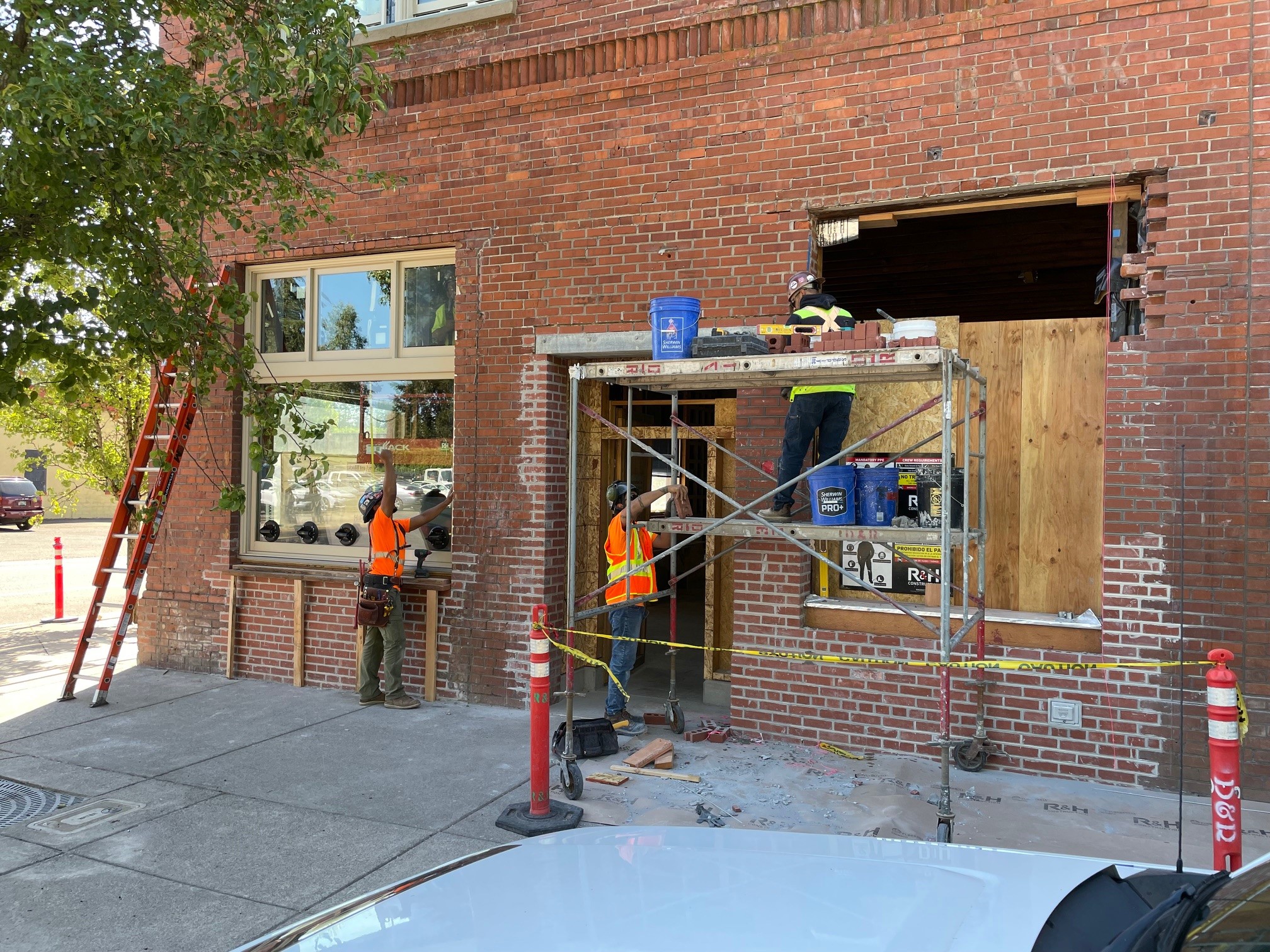
The team weaved new architectural finishes into the aged buildings’ facades, making them feel cohesive. R&H worked with two specialized masonry teams; one to artfully restore the historic brick and one to install new brick crafted to replicate the existing. For the new, replacement windows, the architect selected a historically and architecturally appropriate option that honored the original window design.
While completing demolition of the existing roof, R&H noticed that one of the existing masonry walls began to shift away from the building. It appeared that when the wall was originally constructed, the brick was not tied (toothed) into the adjacent wall and essentially making it a standalone wall. After review of the soil, the geotechnical engineer determined that it was unsuitable for long-term footing support due to silty and soft conditions. The solution was to install helical piles under the foundation to mitigate any further settlement and properly support the footing.
A Focus on Community Revitalization and Historic Preservation
The Merchant Block contributes meaningfully to the ongoing revitalization of Dayton, a community of approximately 2,650 residents. By restoring three long underutilized historic buildings and introducing The Inn at Dayton, the project reactivates the city’s commercial core with four new tenant spaces intended to be a wine store, tap house, restaurant and café. These businesses create jobs, support local entrepreneurs and provide new spaces for residents and visitors to gather and connect.
The rehabilitation also preserves the legacy of Ella J. Harris, original owner of the Harris Building. Being a woman owner of a major commercial building in the early 1900s is unique enough, but Ella has another important distinction. She is noted as the first woman voter in Oregon, having cast her ballot immediately after suffrage was granted in 1912. As the Harris Building continues serving the public, so does the story of Ella Harris, reinforcing a powerful narrative of civic leadership and women’s history within Oregon.
Sustainable for the Future
Environmental stewardship was embedded in both design and construction. The development is projected to use approximately 30% less energy than a comparable baseline building and is on track to achieve LEED Gold certification.
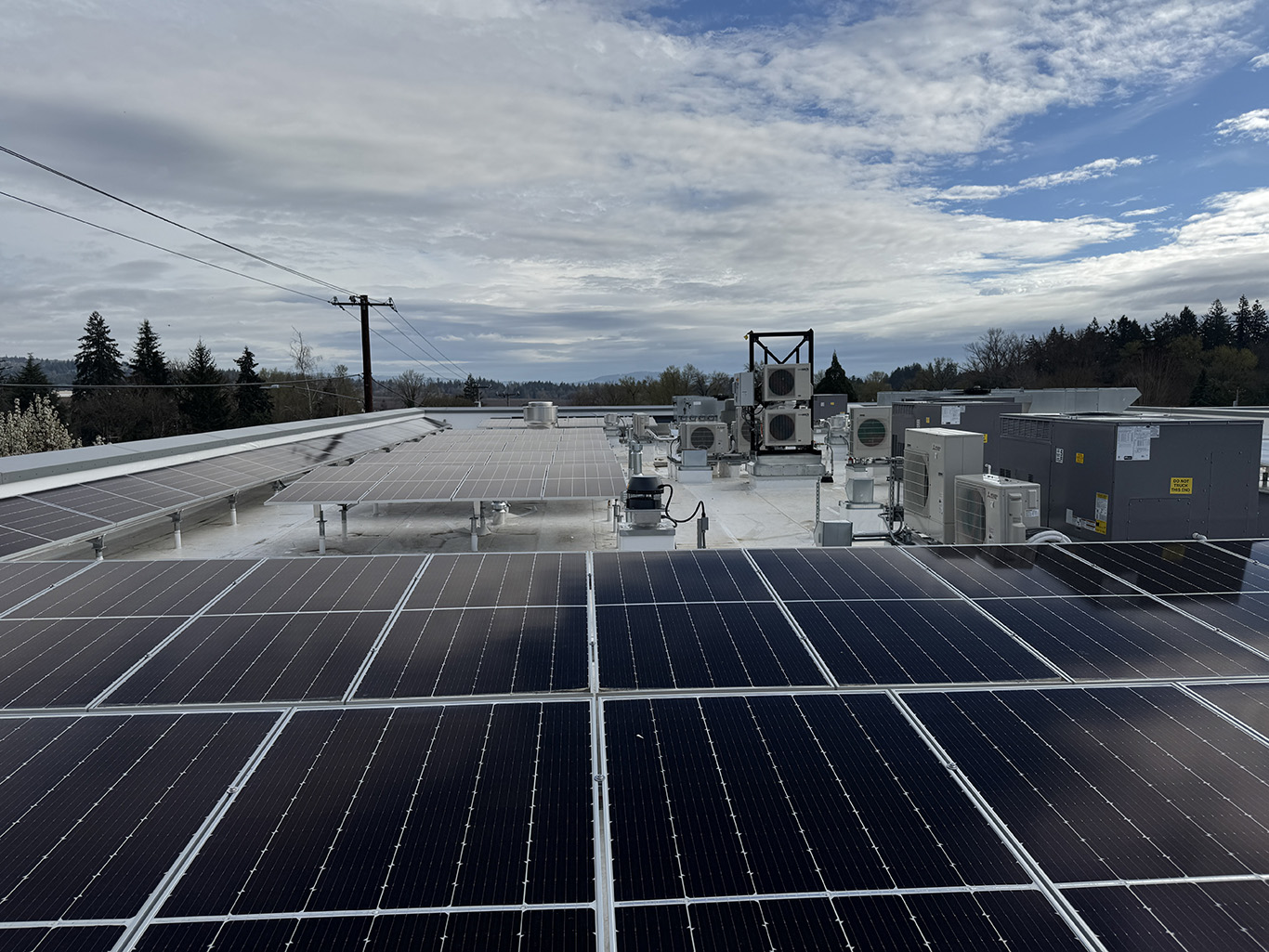
A 66 kW solar photovoltaic system with 136 panels was installed on the roof of the buildings and is expected to offset approximately 930 tons of CO₂ over its lifetime, equivalent to roughly 111,000 gallons of gasoline. High efficiency mechanical systems, high R value insulation, enhanced commissioning, energy and water metering and comprehensive envelope upgrades further reduce operational demand. Light pollution reduction strategies were implemented with exterior fixtures directed downward to minimize impacts on birds and the surrounding environment.
As noted above, during construction, the team prioritized diversion and reuse, recycling salvaged materials where feasible and diverting demolition and construction waste from landfill.
Self-Performing for Quality and Precision
R&H’s self-perform crew played a critical role in delivering the level of craftsmanship required for a boutique hotel rooted in historic structures. A major component of this effort was the installation of new but historically accurate windows, carefully set within existing masonry openings that were not square and varied from floor to floor. A total of 88 windows (24 window types) were replaced. Our carpenters coordinated field measurements, framing adjustments and finish integration to ensure proper fit, weather performance and visual alignment with restored masonry.
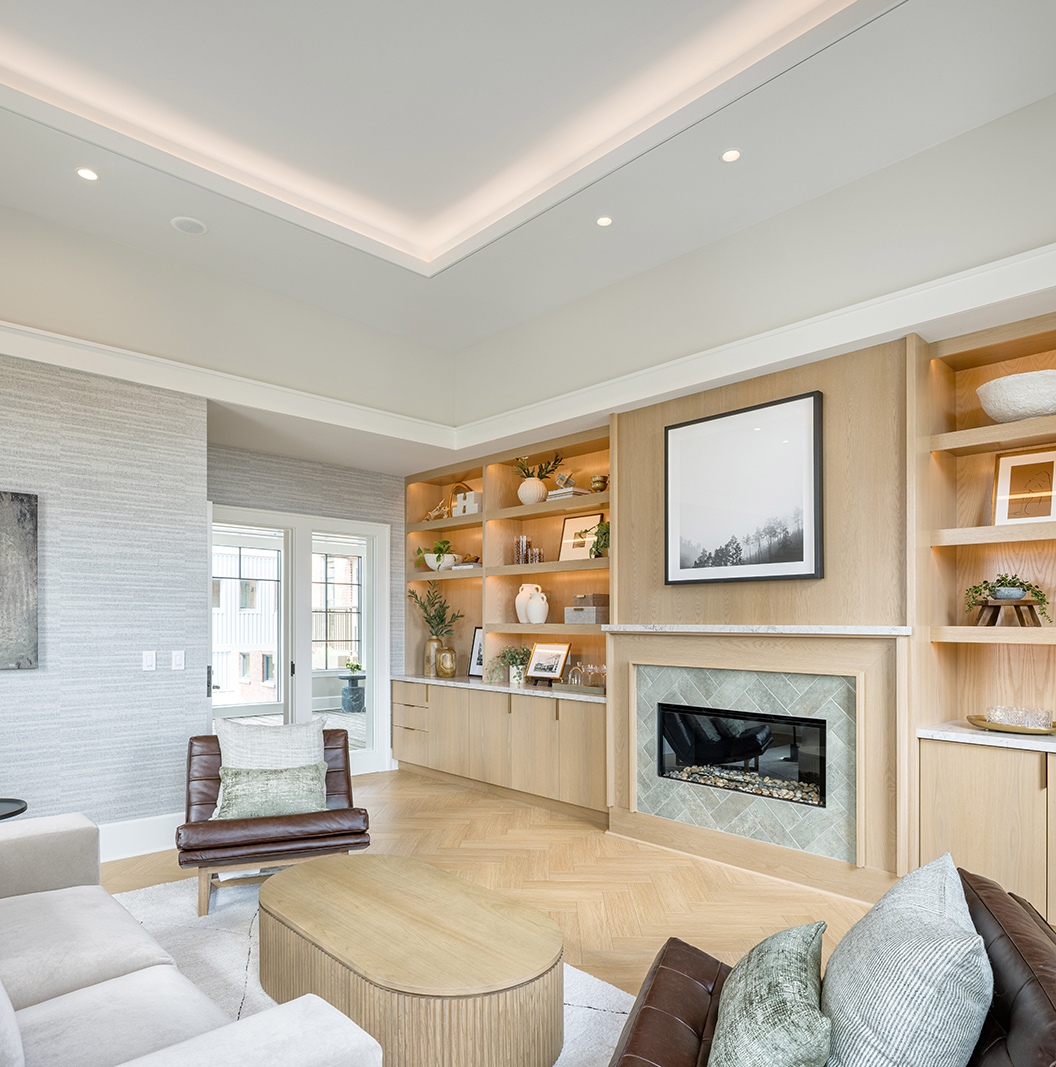
Beyond windows, the R&H carpenters executed intricate finish carpentry, trim installation and millwork throughout guest rooms, corridors and common areas, unifying historic detail with modern finishes. Miles of detailed, historically accurate trim work and wainscoting were installed throughout the hotel, in addition to stair detailing, a coffered lounge ceiling and architectural beam details in guest rooms.
Select demolition, framing modifications and specialty installations were self-performed, requiring real time problem-solving as historic irregularities were uncovered. In a building where no two floors or walls were perfectly aligned, having in-house craftspeople on site ensured adjustments could be made immediately without compromising schedule or quality. By self-performing these key scopes, R&H maintained direct control over quality, sequencing and safety, reinforcing the project’s commitment to preservation, precision and a refined guest experience.
Building in the heart of the Dayton community was a truly unique and special experience. With its tight-knit community, R&H focused on engagement and communication through the duration of construction. The team built strong relationships with the City, Public Works and Fire Department staff by providing weekly construction activity updates and hard hat tours at major phases in the project. Cool fact – the Fire Marshal’s parents were the previous owners of a grocery and general store located in the ground floor of the Stuckey Building for 43 years!
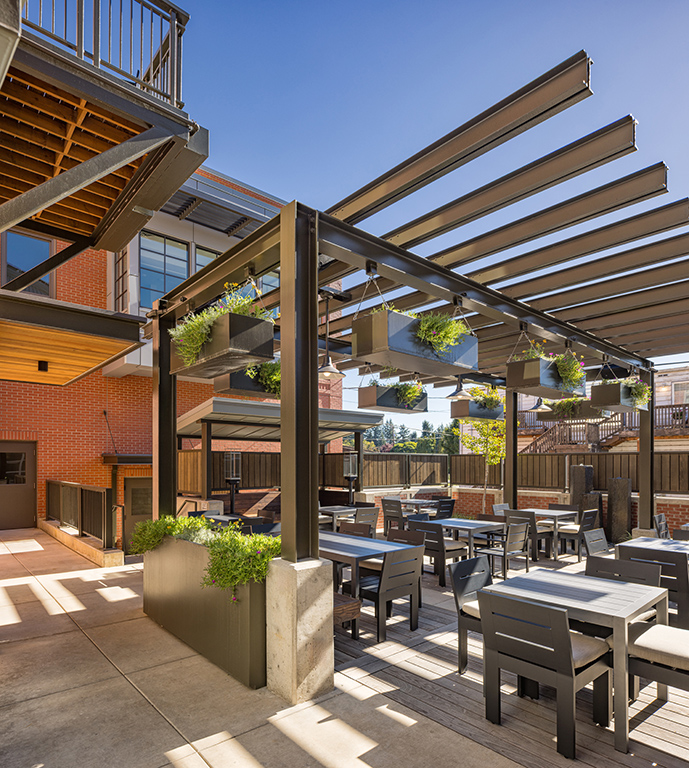
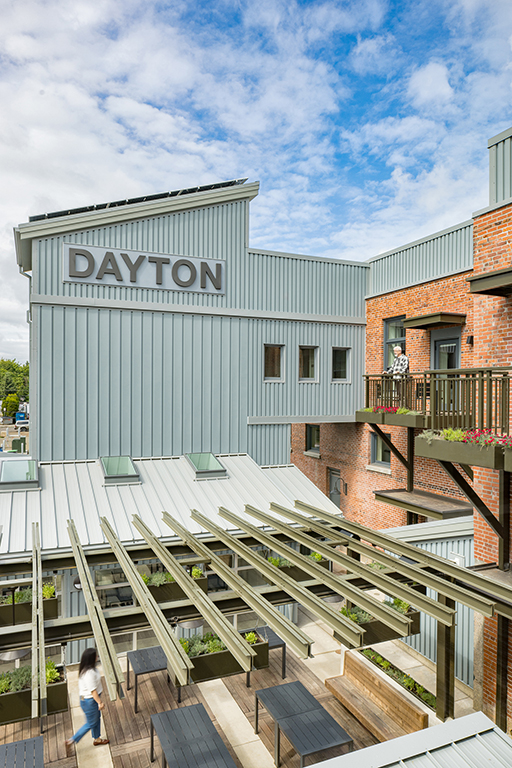
More than a historic renovation, the Merchant Block serves as a catalyst for downtown Dayton’s continued growth, bringing new energy, visitors and opportunities to the heart of the community.